

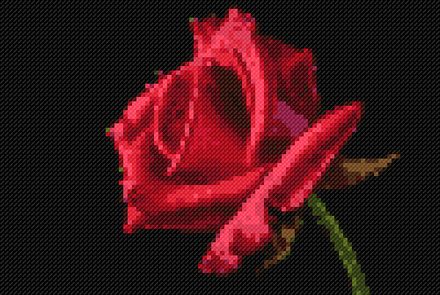
Red rose
Cross-stitch
- Size in stitches
- 100 × 67
- Finished work
- ≈ 18 × 12 cm, Aida 14
- DMC colours
- 19
- Skeins
- 21
Photo: Josch13, Pixabay Content License
Download PDFBeginners should start with easy, stitchers with some practice can take intermediate, and advanced is for smooth shading. Mimi worked out every chart in DMC colours: the PDF is free, no sign-up needed.
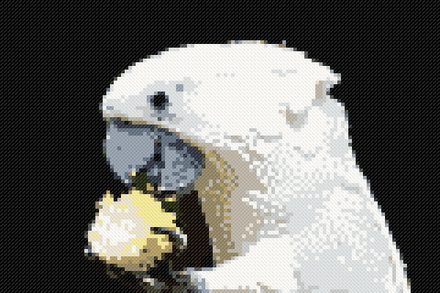
The picture on the right is a calculated preview, not a photo of finished work. Skeins and bags are estimates with a margin.
Chart © Mimimetr. For personal use only, not for sale or redistribution.
Cross-stitch up to 120 stitches wide with up to 16 colours, diamond painting on a 20 × 30 cm canvas. Large shapes and a clear subject.
Cross-stitch
Photo: Josch13, Pixabay Content License
Download PDF
Cross-stitch
Photo: ignartonosbg, Pixabay Content License
Download PDF

Cross-stitch
Photo: ulleo, Pixabay Content License
Download PDFCross-stitch 120 stitches wide with about 20 colours, diamond painting on a 30 × 40 cm canvas. More detail, sometimes blended threads.


Cross-stitch
Photo: nguyendinhson067, Pixabay Content License
Download PDF
Cross-stitch
Photo: JJ-Jordan, Pixabay Content License
Download PDF

Cross-stitch
Photo: DimaDim_art, Pixabay Content License
Download PDF
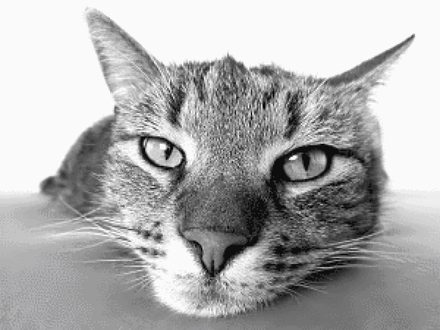
Cross-stitch
Photo: Katzenspielzeug, Pixabay Content License
Download PDFCross-stitch 180 stitches wide with about 40 shades including blended threads, diamond painting on a 30 × 40 cm canvas. Many colours, smooth transitions.


Cross-stitch
Photo: Pixabay Content License
Download PDF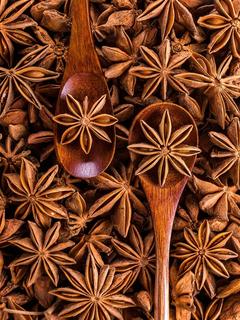
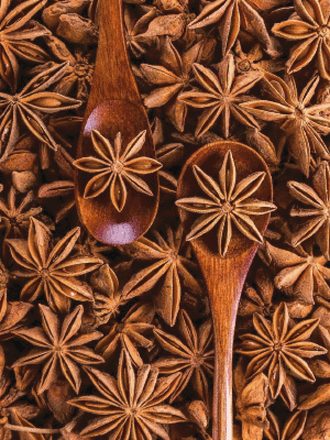
Cross-stitch
Photo: Daria-Yakovleva, Pixabay Content License
Download PDF

Cross-stitch
Photo: manuelamilani, Pixabay Content License
Download PDF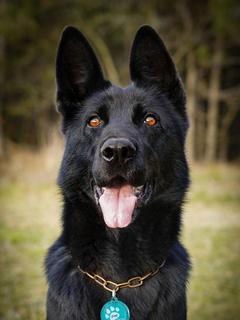
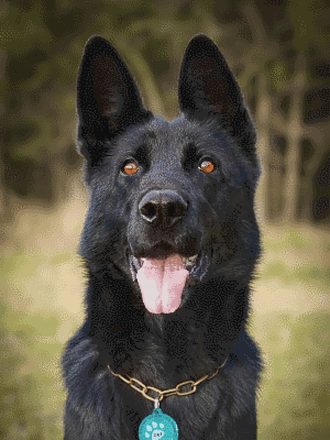
Cross-stitch
Photo: YamaBSM, Pixabay Content License
Download PDFCross stitch makes pictures on fabric with crossed diagonal stitches; you can follow a separate chart or a design printed on the fabric.12 For a first project, we recommend a readable chart, a clearly visible fabric grid and a motif with distinct colour blocks: give yourself a friendly beginning, not a tiny textile obstacle course.
A cheerful lemon for the kitchen, then suddenly a whole drawer of thread? You are in good company: DMC says it sells a million skeins a day.3 That is the company's claim, not our count. Before your lemon acquires a whole imaginary fruit bowl, meet the instructions.
In counted cross stitch, you follow symbols or colours on a separate pattern and count stitches on a blank fabric grid; in stamped work, stitch locations are printed on the fabric.2 Two routes, same invitation: make something lovely with thread.
Think of counted work as consulting a map; stamped work puts the directions under your needle. Neither needs to become a personality test. If the idea of reading a chart appeals, try counted work. If you would rather have the design already in front of you, consider stamped work. Choose the instructions you actually want to follow, not the ones that sound most impressive.
Compare the visibility of the fabric grid and whether you want a separate chart or a printed design. DMC describes Aida as having clearly identifiable holes; on linen or evenweave, crosses are commonly worked over two thread intersections.1 That describes where the stitch goes,1 so check the pattern rather than guessing.
Fabric and pattern format answer different questions. Use this table as a selection guide, not a list of mutually exclusive categories.
| Choice | What it changes | Our suggested check |
|---|---|---|
| Aida | Offers clearly identifiable stitch holes.1 | Can you comfortably follow the grid? |
| Linen or evenweave | Commonly uses stitches worked over two thread intersections.1 | What does this pattern specify? |
| Counted format | Uses a separate pattern and blank fabric grid.2 | Can you distinguish the chart symbols? |
| Stamped format | Places the design directly on the fabric.2 | Would you enjoy following printed stitch locations? |
Choose a clear view, not an ambitious shopping basket. This is not an audition for the Royal Academy of Very Small Holes.
No: with the English method, you complete each cross before beginning another; with the Danish method, you make a row of half crosses and complete them on the return journey.1 Neither name is a difficulty rating here.
Our suggestion: try each on a small practice patch before committing to a whole motif. Which sequence makes sense to your hands? There is no need to award yourself extra homework for choosing one.
DMC advises keeping the upper diagonals leaning consistently in the same direction, including when working fractional stitches.1 Think of those diagonals as a little chorus: everyone gets to sing, but they should face the same way.
Half a stitch is not necessarily an abandoned job. DMC's fractional stitches include quarter, half and three-quarter crosses, used to help create curves.1 A half cross is one diagonal; a quarter stitch runs between a corner and the centre of the square.1
“Finish every X” is not a safe rule: DMC's quarter stitch, for example, is worked “as shown in your pattern”.1 Check for fractionals before choosing a design. The lemon can wait for its sophisticated curves.
Check the strand count specified by your pattern before choosing thread. DMC's Six-Strand Embroidery Floss is 100% cotton and, as the name says, has six strands.3 That describes the product, not how many strands your project needs.
Our suggestion: write a materials list before browsing. Tempting extras are not automatically part of today's lemon.
Use these as our editorial selection advice, not an industry grading standard. We would call clear blocks with few changes an easy starting choice; smaller details and more switching suggest intermediate; scattered colours and subtle shading suggest advanced.
The V&A holds Martha Edlin's sampler, stitched at eight in 1668, and a more technically sophisticated piece she made the following year, with cutwork and needle lace.4 Not a beginner's deadline, just a lovely reminder: keep your early attempts too. Thread can record learning, not just a finished picture.
View Mimimetr's examples, download the free PDF charts and practise with a design that makes you smile. Bring your own materials. That cheerful lemon has waited long enough.
Counted work is an option for beginners; the PDF supplies a chart, not materials. Here are the quick checks before starting.
Yes: we recommend starting with a chart you can read comfortably and a motif whose sections you can recognise. Counted work follows a separate pattern on a blank grid.2
Not when the pattern asks for it. DMC gives the half cross its own entry among fractional stitches, formed with one diagonal.1
No. The download is a chart; materials are not included. Check its instructions before gathering supplies.
Sources: 1. dmc.com · 2. sewitall.com.au · 3. dmc.com · 4. vam.ac.uk
Five steps from your favourite photo to a printable cross-stitch PDF, with a DMC legend, preview checks and a sensible thread shopping list.
Our portrait-chart calculations separate palette entries from actual DMC thread colours, with results at four widths and clear limits.
The source images come from Pixabay under the Pixabay Content License. Only small previews are shown here, and only the chart can be downloaded. See the originals on the authors’ pages.